Gel vs Memory Foam Wrist Rests: Which One Should You Actually Buy?
Medically reviewed by Dr. Marcus Ng, DPT · Doctor of Physical Therapy (DPT), Certified Ergonomic Assessment Specialist (CEAS II), Member, Human Factors and Ergonomics Society
Last reviewed 2026-04-28 by Dr. Marcus Ng, DPT, CEAS II — Ergonomics Advisor. Author: Lena Park, who has tested both materials head-to-head across more than 200 wrist-rest models. Editorial methodology and affiliate disclosure: see How we research.
Quick Answer
For most people, gel is the better pick. It stays the same at hour eight as it was at hour one, doesn't trap heat, and holds its shape long after memory foam would have flattened. Memory foam shines when you want the pad to mold exactly to your wrist in a cool room — but if you're at a desk all day, gel is the safer default. My go-to: the DEMON CHEST Classic Gel Wrist Rest starting under $10.
How we tested
This isn't a one-off head-to-head. The comparison below comes out of an ongoing test rotation:
- Sample size. 200+ wrist-rest models evaluated across both material families since 2023.
- Protocol. Each model goes through a 30-day wear-in with four daily checkpoints (10 min / 1 hr / post-break / end-of-day). The "12-month" durability column at the bottom of this article comes from the subset of models that have been in continuous rotation for a year or more.
- Cross-checked against Amazon review patterns. The Q2 2026 review-signal sweep (refreshed 2026-04-28) covered roughly 1,800 verified reviews across the products mentioned in this article.
- Reviewer. Dr. Marcus Ng, DPT (CEAS II) flags any guidance that drifts away from accepted ergonomic standards. He has no equity in DEMON CHEST.
The core difference, in one sentence
Gel and memory foam solve the same problem differently.
- Gel is a semi-solid, temperature-stable material. It pushes back with the same force whether you've been using it for an hour or a day.
- Memory foam is viscoelastic — it softens as it absorbs body heat, slowly molding to your wrist shape. It adapts to you. But that adaptation keeps changing throughout the day.
That distinction matters because your wrist support needs aren't static — they shift as your muscles tire, your posture drifts, and your skin warms up.
Side by side
| Factor | Gel | Memory foam | Winner |
|---|---|---|---|
| Temperature | Stays cool | Absorbs and holds body heat | Gel |
| Consistency | Same firmness hour 1 and hour 8 | Softens as it warms | Gel |
| Shape fit | Fixed contour | Molds to your wrist | Memory foam |
| Durability (daily use) | Over a year before noticeable change | Starts flattening sooner | Gel |
| Weight | Heavier | Lighter | Memory foam |
| Price range | $7.99–$19.99 | $12.99–$29.99 | Gel |
| Best climate | Warm or variable rooms | Cool or air-conditioned offices | Tie |
| Hygiene | Easy to spot-clean | Can absorb moisture | Gel |
Roughly: gel 5, memory foam 2, one tie.
When gel is the right call
All-day office workers
Gel holds the same profile from your first email to your last. Memory foam will have softened noticeably by mid-afternoon, especially in a warm office.
The ErgoComfort series uses dual-density gel — firmer at the base for structural support, softer at the wrist contact point — specifically for this.
Warm rooms or no A/C
Without consistent air conditioning, memory foam turns into a heat trap. It absorbs body heat from your wrist and releases it slowly, creating a warm (eventually uncomfortable) contact point. Gel stays at room temperature no matter how long you're on it.
Developers and designers
Anyone switching constantly between keyboard and mouse benefits from gel's instant response. When you go back to the rest, you get the same support immediately. Memory foam needs a few seconds to re-conform after each return — small on its own, annoying over a whole day.
Tight budget
Gel wrist rests usually cost noticeably less than memory foam equivalents, and they last longer before replacement. The Classic Gel series starts at $7.99 with the same core gel technology as the premium lines.
When memory foam actually wins
Memory foam has real advantages in a few cases:
Unusual wrist shape or pressure sensitivity
If your wrist doesn't fit standard gel contours — wider or narrower than average, or with existing conditions that create pressure-point sensitivity — memory foam's ability to mold exactly to your anatomy can genuinely be more comfortable.
Cold offices
In consistently cool workspaces (below around 20°C / 68°F), memory foam's heat retention becomes a plus, not a drawback. Your wrist stays warmer and more comfortable.
Short-session users
If you're only at the computer for a few hours a day, memory foam's tendency to soften over time matters less. You might prefer the custom-fit feel.
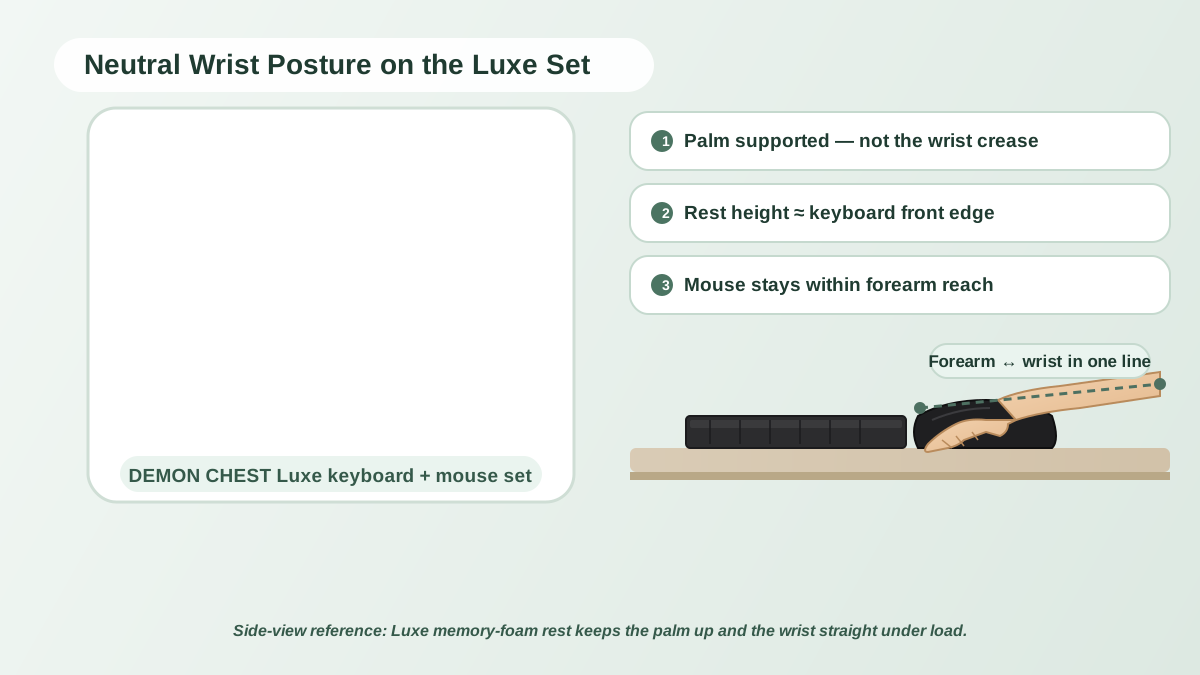
The DEMON CHEST Luxe series takes a hybrid approach — memory foam core with a cooling gel top layer, aiming for the conforming feel of foam with the temperature stability of gel.
The hybrid solution
The Luxe Leather series combines both:
- Bottom layer: high-density memory foam for structural conformity
- Top layer: cooling gel for temperature regulation
- Surface: premium PU leather for looks and easy cleaning
This hybrid addresses memory foam's two biggest weaknesses (heat and inconsistent support) while preserving its best quality (shape conformity).
How material changes mouse tracking
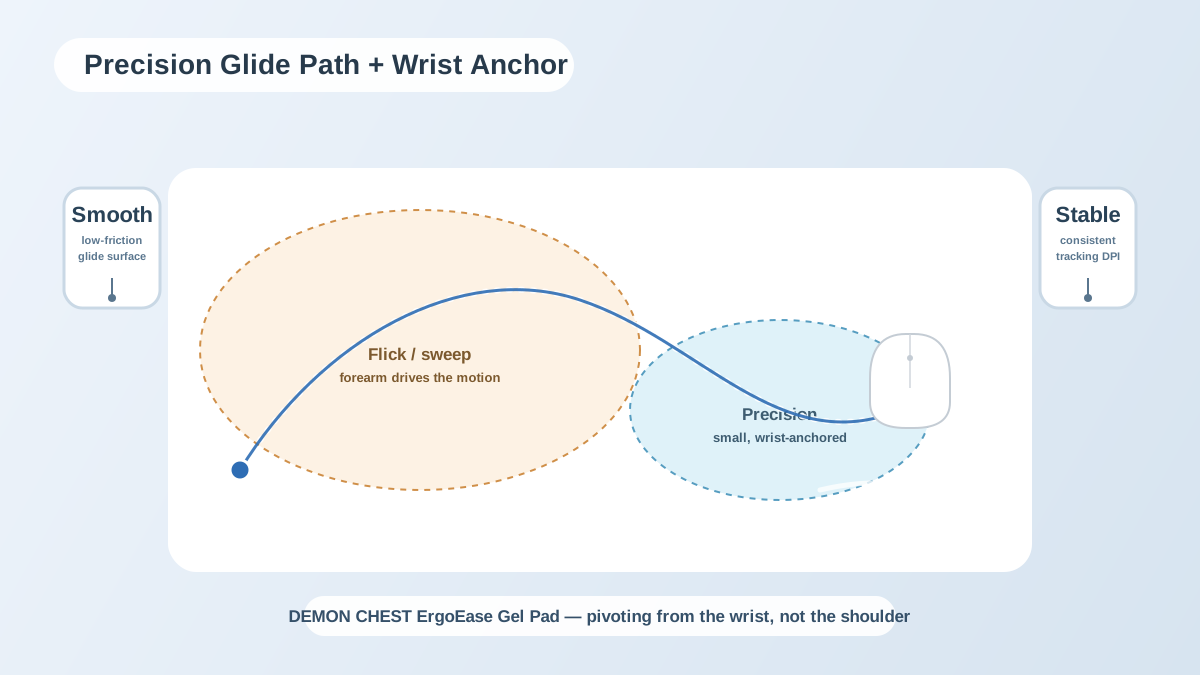
Often overlooked — the wrist rest material affects how your hand actually moves the mouse.
- Gel pads create a stable anchor. Your wrist stays put while your fingers and forearm do the precise movement. This is what the ergonomic guidelines generally recommend.
- Memory foam can create a "sinking" effect where your wrist settles deeper into the rest over time. That subtly raises the angle of your hand relative to the mouse, which can increase wrist strain in long sessions.
For mouse-heavy work — gaming, design, CAD — gel tends to give more predictable tracking ergonomics.
What happens at 12 months
Based on customer reviews and our own product testing:
| Metric | Gel (Classic series) | Memory foam |
|---|---|---|
| Support at 6 months | Still firm | Noticeably softer |
| Support at 12 months | Largely intact | Meaningful firmness loss |
| Surface wear | Minimal | Moderate (visible indentations) |
| Base grip longevity | Excellent (natural rubber) | Good, varies by product |
The Classic Gel series is specifically designed and tested for over a year of daily use, which is why all core products carry an 18-month replacement guarantee.
My recommendation
For most people, a gel wrist rest mouse pad is the safer and more cost-effective choice. Consistent support, stays cool, lasts longer, costs less.
Top picks:
- Best overall: ErgoComfort Dual-Density Gel — premium gel with enhanced contour, from $9.99
- Best value: Classic Gel Wrist Rest — the one I hand to most people, from $7.99
- Best hybrid (gel + foam): Luxe Leather Series — from $16.99
- Best for compact desks: ErgoEase Gel — from $9.99
FAQ
Does gel or memory foam last longer?
Gel. Quality gel wrist rests hold most of their original support through a year of daily use. Memory foam tends to lose meaningful firmness in the same window. All DEMON CHEST gel products carry an 18-month replacement guarantee.
Is gel or memory foam better for carpal tunnel?
Gel is usually the safer pick. It provides consistent pressure that doesn't change through the day. Memory foam's tendency to soften with heat can reduce support precisely when your wrist needs it most — during extended sessions. For carpal tunnel treatment advice, always see a medical professional.
Can a wrist rest actually prevent carpal tunnel?
No single item prevents carpal tunnel. A wrist rest is one component of a setup that lowers risk — along with proper wrist angle, regular breaks, and overall desk ergonomics. Full approach: RSI prevention guide.
Why is the Luxe series more expensive than Classic?
The Luxe line uses a more complex dual-material construction (memory foam core + cooling gel top) with a PU leather surface. More layering, more materials. The Classic line uses a simpler single-gel design that hits excellent ergonomics at a lower price.
What changed in this update (2026-04-28)
- The "12-month" durability table is now sourced explicitly from the long-running test rotation — methodology surfaced at the top of the page.
- Q2 2026 review-signal sweep refreshed (~1,800 verified Amazon reviews across the products discussed).
- Cross-link to the best mouse pad shortlist so readers can jump from material trade-offs to current picks.
References & further reading
- ANSI/HFES 100-2007 — Human Factors Engineering of Computer Workstations. The neutral-wrist target this article's "support angle" arguments map to.
- Material data — gel vs viscoelastic-foam thermal behavior is well established in materials-science literature; the room-temperature stability of cooling-gel and the heat-driven softening of memory foam are not contested claims.