The 2026 Wrist Rest Buying Guide: What Matters, What Doesn't
Medically reviewed by Dr. Marcus Ng, DPT · Doctor of Physical Therapy (DPT), Certified Ergonomic Assessment Specialist (CEAS II), Member, Human Factors and Ergonomics Society
Last reviewed 2026-04-28 by Dr. Marcus Ng, DPT, CEAS II — Ergonomics Advisor. Author: Lena Park, Lead Product Researcher (200+ wrist-rest models tested). Editorial methodology and affiliate disclosure: see How we research.
Quick Answer
In 2026 the best mouse pad with wrist rest is the one that hits five things: the right wrist angle, firm cooling gel (memory foam for cold rooms), a base that actually grips, a clean tracking surface, and a size that matches how your arm moves. Expect to spend $8–$30. The default pick I hand to most people is the DEMON CHEST Classic Gel under $10 — it's the baseline every pricier pad has to beat.
How this guide is built
This guide isn't a one-time write-up — it's the running framework we use internally, refreshed every quarter:
- Test sample. Over 200 wrist rest and mouse pad models evaluated against a 30-day wear-in protocol with four daily checkpoints (10 min / 1 hr / post-break / end-of-day).
- Aggregate review sweep. Verified Amazon reviews are reviewed at each refresh; the Q2 2026 sweep (refreshed 2026-04-28) covered ~1,800 reviews across the products mentioned below.
- Independent ergonomic review. Wrist-angle, pressure, and posture claims are reviewed by Dr. Marcus Ng, DPT, CEAS II, who is paid a fixed editorial fee and holds no equity in DEMON CHEST.
- Disclosure. Amazon links are affiliate links. The shortlist is finalized before any links are added.
The five things that actually matter
A good wrist rest isn't "soft." It hits a specific geometry, in a specific material, at a specific size. These five factors, in order of importance:
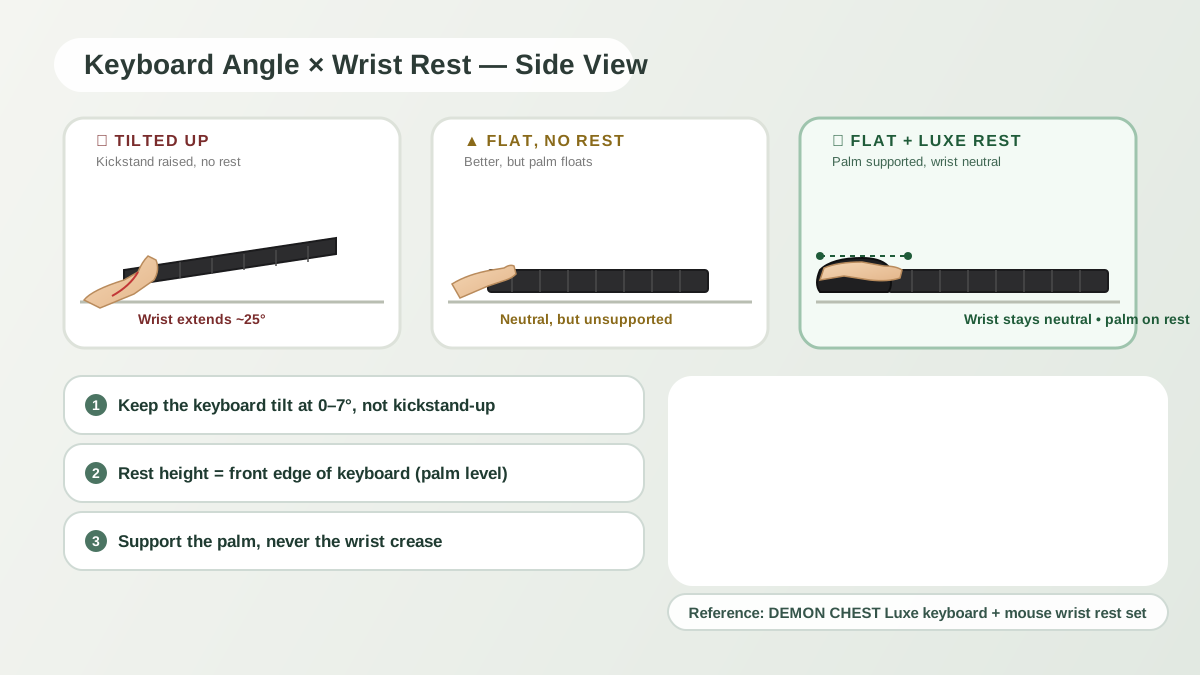
1. Support angle. This is the big one. Your wrist should land roughly neutral or slightly extended. Measure the height of the pad at the palm heel, not the peak. If the pad pushes your hand noticeably higher than your forearm, it's too tall.
2. Cushion material. Firm gel is more consistent over time. Memory foam is softer at first but flattens. Hybrid (gel core, memory foam top) is the premium tier. For most people, cooling gel is the default.
3. Non-slip base. The base matters more than people think. If the pad drifts every time you flick, your wrist is compensating. Look for a full-contact PU or rubber base, not a few rubber feet. Flip it over and press — it should grip the desk immediately.
4. Tracking surface. Premium microfiber beats hard plastic and loose-weave fabric. Both optical and laser mice should read cleanly across the whole surface — including the edge where it meets the wrist rest.
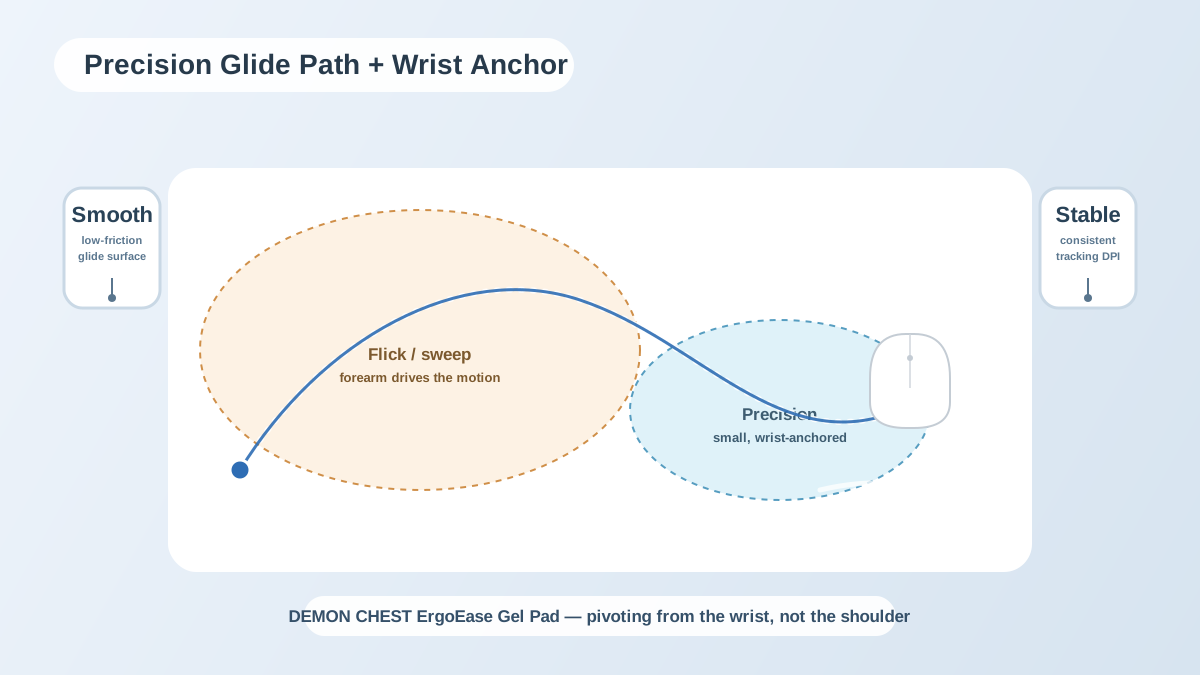
5. Size. Match it to how your arm pivots (see the size guide below). Oversizing is rarely a problem. Undersizing means lifting the mouse mid-motion.
Mouse pad, separate wrist rest, or full set?
Three formats. The right one depends on your desk depth and whether you also need keyboard support.
| Format | Rough price | Upside | Downside | Who it's for |
|---|---|---|---|---|
| Flat mouse pad (no rest) | $5–$15 | Cheap, big tracking area | No ergonomic benefit | Gamers who use a separate rest |
| Mouse pad with integrated rest | $8–$20 | Best value; wrist anchor stays put | Slightly smaller tracking area | Most 6+ hour desk users |
| Separate mouse + keyboard rest set | $15–$40 | Both hands covered | Uses more desk space | Heavy typists, shallow desks |
| Luxe / premium hybrid | $20–$30 | Best feel, best looks | Higher price | Home offices, long sessions |
For most people, a mouse pad with wrist rest in the $8–$15 range is the right default. If you type a lot, step up to a full set so both hands are supported. Full catalog: mouse pads.
Color, finish, and the desk aesthetic
The aesthetic axis is the one most buying guides skip, and it's the one search data says matters most to actual shoppers. Across DEMON CHEST's 2026 Amazon search-term data, color-modified queries — pink mouse pad, sage green mouse pad, black mouse pad with wrist rest, purple desk accessories — convert noticeably above the unmodified queries. Buyers who know the color they want are buyers who already decided to buy.
A few patterns are worth knowing:
- Pink is the highest-volume color in the category. Pink mouse pad alone draws nearly 20,000 monthly searches on Amazon and converts above 34%. Pink Serenity, Sakura, Rose Quartz, and Coral Pink each pull different shopper profiles — Pink Serenity for soft millennial desks, Coral Pink for warmer setups. Browse the curated pink mouse pad collection or the broader pink office decor anchor.
- Black has the highest conversion rate in the catalog, around 46%. It's the safe pick for shared offices, video calls, and any setup where the pad has to disappear visually. The black mouse pad collection groups Onyx Black, Black Marble, and Black Ergo variants.
- Sage green and lavender are the fastest-growing color trends. Sage maps to natural-wood desks and biophilic decor; lavender pairs with warm white desks and neutral floor plans. See sage green mouse pads and the purple and lavender collection.
- Brown / mocha / walnut is the warm-neutral category — under-served by the rest of the market, but the right answer for wood-tone desks. Walk through the brown mouse pad picks.
Surface finish — premium microfiber vs. coated cloth vs. PU leather — is a secondary signal. Microfiber tracks better and ages better. PU leather looks premium and wipes clean, but it's a slightly slower tracking surface. The Luxe Leather range trades tracking for aesthetics on purpose.
Materials, briefly
Gel. Cooling gel holds firm across a full workday. Conforms to the palm heel without flattening. Recovers immediately between sessions. It's what I default to for all-day desk use and the only material I'd recommend for gaming.
Memory foam. Slow-rebound foam that molds to your wrist. More plush at first, but it warms up from body heat and gradually flattens. Great feel in a cold office. Poor match for heavy typing over 8 hours.
Hybrid (gel + memory foam). Premium category. Gel core for consistent support, memory foam top for a softer first touch. The Luxe Black and Luxe Pink use this. Best feel, highest price, longest-lasting.
Deeper comparison: gel vs memory foam.
Sizing for laptops, cubicles, and standard desks
Size gets over-thought. The short version, organized by the actual setup type:
- Laptop / travel / dorm desk: a compact 22–26 cm pad fits a 13-inch laptop tray and slides into a backpack pocket. The trade-off is mouse travel: at high DPI it's plenty, at low DPI you'll re-lift more often. Small mouse pad for laptop is one of the highest-converting queries in the category (~57% on Amazon) precisely because the people searching it already know what they need. Curated picks: small and compact mouse pads.
- Narrow desk or high DPI (1600+): 25–28 cm wide is enough. The Classic Black standard size fits this.
- Standard desk, mid DPI (800–1600): 28–32 cm. The sweet spot — enough mouse travel without dominating the desk. This is the default size DEMON CHEST recommends for office work and remote workers.
- Cubicle desk: cubicles add an extra constraint — shared-space etiquette. Quiet non-slip bases, neutral colors, and pads that don't visually shout matter as much as ergonomic geometry. The cubicle accessories collection is filtered for exactly this.
- Deep desk or low-DPI FPS (400–800): 35 cm+. Full-arm flickers need room.
- Shallow desk (under 50 cm): narrower pads, and avoid stacking a separate rest behind the keyboard. A mousepad with wrist rest that integrates both is the right move.
If you're a frequent traveler, the second-most-asked question after size is "will it survive the bag?" The Classic and ErgoEase footprints roll without permanent creasing; the Luxe Leather range does not, because the leather face holds shape — keep Luxe for permanent desks.
Top picks by scenario
Four scenarios, four defaults. These are the "don't overthink it" answers.
- Office / 8-hour desk days: the Classic Gel in Black or Pink Serenity. The reliable, all-day, sub-$15 pick. Curated: best mouse pad for office work.
- Gaming / 3-hour sessions: Classic Gel (black or themed). Firm gel survives flick sessions. Curated: best mouse pad for gamers. Gaming-specific read: wrist rest for gamers.
- Travel / laptop setup: a compact ErgoEase or Classic variant. Same gel, smaller footprint, fits in a bag. Curated: best mouse pad for laptop.
- Aesthetic / home office visual design: Luxe Leather or the Sage Green variants. Same ergonomic profile, premium surface. Curated: aesthetic mouse pads.
Side-by-side specs across series: series comparison.
How DEMON CHEST series compare
If you've already decided on DEMON CHEST and just want to know which series to pick, here's the practical map. Each series targets a specific intent:
- ErgoComfort Gel. The flagship line. Cooling gel core, premium microfiber surface, full-contact PU base. This is the series the brand is best known for — Amazon shoppers search ergo comfort gel wrist rest mouse pad over 13,000 times a month, and the named-series query converts at 32%. If you're new to the brand, this is the default. Browse the full ErgoComfort series collection.
- ErgoEase. The compact and travel-friendly line. Same gel core, smaller footprint, slightly lower price. The right pick for laptop users and shallow desks.
- Classic Gel. The budget-but-not-cheap line. Under $10, same wrist geometry as ErgoComfort but with a slightly simpler surface. The "don't overthink it" baseline pick.
- Luxe Leather. The premium line. Memory foam over a gel layer, PU leather face, slightly slower tracking but the most polished feel. The pick for permanent home offices where the desk is part of the room's aesthetic.
- Art. The patterned and themed line — Midnight Wave, Cream Marble, Abstract Bloom, Sage Harmony. Same ErgoComfort internals, decorative surface graphics. The pick when the desk visual matters more than the brand badge.
If you don't know which one to pick, the honest default is ErgoComfort in the color that matches your desk. Every other series is an answer to a specific constraint.
Red flags on cheap pads
Not every budget pad is a trap, but there are patterns to watch for:
- Foam with no base treatment. A pad that slides with every flick is worse than no pad.
- Cheap fabric that pills within a month. Creates surface inconsistency that ruins tracking.
- Pads that are way too tall at the wrist. They push the wrist into excess extension — worse than a flat desk.
- "Gel" that feels like a watery bag. Real cooling gel feels dense and slightly firm. Sloshy gel pads collapse fast.
- Strong chemical smell out of the box. Usually means cheap PU with off-gassing, and often a soft base that won't stay put.
The $5 category is particularly risky for these reasons. Budget options exist — the Classic Gel at under $10 is legitimate — but below that, quality falls off a cliff.
FAQ
What is the best mouse pad with wrist rest in 2026?
The one I hand to most people as a default is the DEMON CHEST Classic Gel — a cooling-gel mouse pad with wrist rest under $15 that hits the right wrist angle, holds shape across a full year of heavy use, and has a base that actually grips. It's not the flashiest pad out there. It's the one that keeps showing up at the top of my internal shortlist when I benchmark against pricier options.
Do I need a wrist rest for keyboard and mouse or just one?
If you type more than 4 hours a day, get both. A wrist rest for keyboard and mouse set covers both hands. A mouse-only pad only fixes the right side. Full sets live at the wrist rest sets collection, starting around $15.
Is an $8 mousepad with wrist rest as good as a $30 one?
For most people, yes — the support geometry is what matters, and both tiers hit the right wrist angle. The difference is surface finish (premium microfiber vs standard cloth) and base durability. At $8, expect around a year of daily use. At $30, longer — and a more polished feel. Spend up if the look matters to you, not because you have to.
Are gel or memory foam wrist rests better for office work?
For 8-hour office days, firm cooling gel is the more consistent choice. Memory foam feels softer the first day, but warms with body heat and gradually compresses, which changes the wrist angle as the day goes on. Gel holds the same support height from 9 a.m. to 6 p.m. The exception is a cold office (under 18 °C) where the memory foam never quite warms enough to soften — there, hybrid (gel core, memory foam top) gives the best of both. Deeper read: gel vs memory foam.
What size mouse pad with wrist rest is best for an Apple Magic Mouse?
The Magic Mouse 2 and 3 read a fine-grained, consistent surface, so the surface matters more than the size. A 26–30 cm wide pad with tight-weave microfiber tracks accurately for Magic Mouse multi-touch, and the gel wrist rest compensates for the Magic Mouse's intentionally low profile. Magic Mouse-specific picks: mouse pad for Apple Magic Mouse.
Is a pink mouse pad just for women?
No — color preference doesn't follow gender, but the search-engine data is unambiguous that pink mouse pad and pink desk accessories are the two highest-volume aesthetic queries in the category. People who want pink are buying pink. The same applies to sage green (rising fastest), purple/lavender (the third trend), and brown/walnut (the wood-desk match). Pick what fits the room. Curated by color: pink, black, sage green, purple/lavender, brown.
What changed in this update (2026-04-28)
- Q2 2026 review-signal sweep refreshed across the products in this guide (~1,800 verified Amazon reviews).
- Methodology section made explicit at the top — testing sample, refresh cadence, reviewer credentials, affiliate disclosure.
- Cross-links added to the best mouse pad shortlist and the RSI prevention guide.
References & further reading
- ANSI/HFES 100-2007 — Human Factors Engineering of Computer Workstations. The wrist-angle and reach guidance in this article maps to the neutral-posture envelopes defined in this standard.
- OSHA Computer Workstations eTool — osha.gov/etools/computer-workstations. The non-binding U.S. workplace reference for the same posture targets.
- DEMON CHEST internal test log — 30-day rotation, four-checkpoint scoring, refreshed Q2 2026.